| 前のトピックへ :: 次のトピックへ |
| 作成者 |
メッセージ |
NiceDays 

登録日: 2021年6月25日
投稿: 100
|
 投稿日時: 月 12月 01, 2025 8:26 pm 件名: |
|
投稿日時: 月 12月 01, 2025 8:26 pm 件名: |
|
|
NiceDays wrote:
I live in Estonia what NLGI-0 (PFTE) grease i can order from EU?
Ordering from US / UK / Japan shipped to EU cost too much, Helimax-XP on eBay is $15, but shipping from US is $17.
My budget is 20 euro including shipping.
How about this if that thing fits good as description say this can get for under 30 eur and its like lifetime quantity 400gr?
 |
|
| トップへ戻る |
|
 |
RokkorDoctor


登録日: 2021年11月27日
投稿: 1562
所在地: Kent, UK
Expire: 2025-05-01
|
投稿日時: 火 12月 02, 2025 9:49 pm 件名: |
|
投稿日時: 火 12月 02, 2025 9:49 pm 件名: |
|
|
RokkorDoctor wrote:
| NiceDays 氏の書き込み: |
I live in Estonia what NLGI-0 (PFTE) grease i can order from EU?
Ordering from US / UK / Japan shipped to EU cost too much, Helimax-XP on eBay is $15, but shipping from US is $17.
My budget is 20 euro including shipping.
How about this if that thing fits good as description say this can get for under 30 eur and its like lifetime quantity 400gr?
|
I wouldn't recommend a multi-purpose grease; the specs don't specify the type of synthetic base oil used for starters.
If you would like to use this then the one you show is too stiff (no 41150, NLGI grade 2). For helicoids IMO you would want either super-lube no. 41150/1 (NLGI-1) or 41150/0 (NLGI-0).
https://www.super-lube.com/wp-content/uploads/2025/05/Technical_Data_Sheet_Multi_Purpose_Grease.pdf
_________________
Mark
SONY A7S, A7RII + dust-sealed modded Novoflex/Fotodiox/Rayqual MD-NEX adapters
Minolta SR-1, SRT-101/303, XD7/XD11, XGM, X700
Bronica SQAi
Ricoh GX100
Minolta majority of all Rokkor SR/AR/MC/MD models made
Sigma 14mm/3.5 for SR mount
Tamron SP 60B 300mm/2.8 (Adaptall)
Samyang T-S 24mm/3.5 (Nikon mount, DIY converted to SR mount)
Schneider-Kreuznach PC-Super-Angulon 28mm/2.8 (SR mount)
Bronica PS 35/40/50/65/80/110/135/150/180/200/250mm |
|
| トップへ戻る |
|
|
NiceDays
登録日: 2021年6月25日
投稿: 100
|
投稿日時: 水 12月 03, 2025 1:49 pm 件名: |
|
投稿日時: 水 12月 03, 2025 1:49 pm 件名: |
|
|
NiceDays wrote:
Shipping for that thing to Estonia is $20 euro + 23 euro actual grease turns out too expensive.
I wanted something to do it today so i got this grease in local car parts store for 9 euro https://webshop.motoral.fi/tuote/154233/
With all the protests from ChatGPT regarding it being too sticky because EP additives and fact not having PTFE additives and not being synthetic its at lease NLGI 0 and it works like charm helicoid moves very smooth and zoom tube also buttery smooth, but zoom could have been faster takes longer than second to go from one end to another.
Yes grease being a bit sticky, but better than nothing i checked entire Estonian market and could not found any other NLGI 0 or NLGI 1 grease.
最終編集: NiceDays、水 12月 03, 2025 3:45 pm、計 1 回 |
|
| トップへ戻る |
|
|
BrianSVP

登録日: 2023年6月9日
投稿: 664
所在地: Philadelphia
|
投稿日時: 水 12月 03, 2025 2:22 pm 件名: |
|
投稿日時: 水 12月 03, 2025 2:22 pm 件名: |
|
|
BrianSVP wrote:
In my experience, the Super Lube is actually quite a nice grease and exceptionally stable, with less oil separation over time (we're talking years) than some of the supposedly purpose-designed helical greases I've tried, including Helimax. The downside is that yes, the widely-available grades are a little thicker/heavier than I'd prefer.
| RokkorDoctor 氏の書き込み: |
| NiceDays 氏の書き込み: |
I live in Estonia what NLGI-0 (PFTE) grease i can order from EU?
Ordering from US / UK / Japan shipped to EU cost too much, Helimax-XP on eBay is $15, but shipping from US is $17.
My budget is 20 euro including shipping.
How about this if that thing fits good as description say this can get for under 30 eur and its like lifetime quantity 400gr?
|
I wouldn't recommend a multi-purpose grease; the specs don't specify the type of synthetic base oil used for starters.
If you would like to use this then the one you show is too stiff (no 41150, NLGI grade 2). For helicoids IMO you would want either super-lube no. 41150/1 (NLGI-1) or 41150/0 (NLGI-0).
https://www.super-lube.com/wp-content/uploads/2025/05/Technical_Data_Sheet_Multi_Purpose_Grease.pdf |
|
|
| トップへ戻る |
|
|
NiceDays
登録日: 2021年6月25日
投稿: 100
|
投稿日時: 水 12月 03, 2025 3:43 pm 件名: |
|
投稿日時: 水 12月 03, 2025 3:43 pm 件名: |
|
|
NiceDays wrote:
| BrianSVP 氏の書き込み: |
| The downside is that yes, the widely-available grades are a little thicker/heavier than I'd prefer. |
Do you mean Super Lube NLGI 0 is thicker or that it supposed to be or than NLGI 0 is difficult to find?
Someone offered me Super Lube NLGI 00 wonder if that is too thin. |
|
| トップへ戻る |
|
|
kiddo
登録日: 2018年6月29日
投稿: 1630
|
投稿日時: 水 12月 03, 2025 11:18 pm 件名: |
|
投稿日時: 水 12月 03, 2025 11:18 pm 件名: |
|
|
kiddo wrote:
Did you guys ever used the Molykote High Vacuum Grease by Dupont? It does mention something about its usability on optics |
|
| トップへ戻る |
|
|
visualopsins


登録日: 2009年3月5日
投稿: 11701
所在地: California
Expire: 2027-07-11
|
投稿日時: 木 12月 04, 2025 12:15 am 件名: |
|
投稿日時: 木 12月 04, 2025 12:15 am 件名: |
|
|
visualopsins wrote:
| kiddo 氏の書き込み: |
| Did you guys ever used the Molykote High Vacuum Grease by Dupont? It does mention something about its usability on optics |
for rubber o-ring seals in optics.  https://www.dupont.com/products/molykote-high-vacuum-grease.html#headingacc4
| 引用: |
| Lubricating O-rings in binoculars and telescopes; prevents fogging of delicate lenses. |
NLGI Grade 3-4
| 引用: |
NLGI Grades 1-3
A grease with an NLGI grade of 1 has a consistency like tomato paste, where a grease with an NLGI grade of 3 has a consistency more like butter. The most commonly used greases, such as those used in automotive bearings, would be NLGI grade 2, which has the stiffness of peanut butter. Grades within this range can operate in a higher temperature range and at higher speeds than NLGI grades 000-0. Greases for bearings are typically NLGI grade 1,2, or 3.
NLGI Grades 4-6
NLGI grades categorized in the 4-6 range have a consistency like ice cream, fudge, or cheddar cheese. For devices moving at high speeds (greater than 15,000 rpm) an NLGI grade 4 grease should be considered. These devices experience more friction and heat build- up, therefore a stiffer, channeling grease is needed. Channeling greases are more easily pushed away from the element as it rotates, thus leading to less churning and less temperature gain. Greases with an NLGI Grade of 5 or 6 are not commonly used in applications. |
https://www.amazon.com/gp/customer-reviews/R1FE48SMOV95A2
| 引用: |
| This is a super viscous grease, designed for industrial O-ring on vacuum pumps and such. |
_________________
☮☮☮☮☮☮☮☮☮☮☮☮☮☮☮☮☮☮☮☮☮☮☮☮☮☮☮☮☮☮☮☮ like attracts like! ☮☮☮☮☮☮☮☮☮☮☮☮☮☮☮☮☮☮☮☮☮☮☮☮☮☮☮☮☮☮☮☮
Cameras: Sony ILCE-7RM2, Spotmatics II, F, and ESII, Nikon P4
Lenses:
M42 Asahi Optical Co., Takumar 1:4 f=35mm, 1:2 f=58mm (Sonnar), 1:2.4 f=58mm (Heliar), 1:2.2 f=55mm (Gaussian), 1:2.8 f=105mm (Model I), 1:2.8/105 (Model II), 1:5.6/200, Tele-Takumar 1:5.6/200, 1:6.3/300, Macro-Takumar 1:4/50, Auto-Takumar 1:2.3 f=35, 1:1.8 f=55mm, 1:2.2 f=55mm, Super-TAKUMAR 1:3.5/28 (fat), 1:2/35 (Fat), 1:1.4/50 (8-element), Super-Multi-Coated Fisheye-TAKUMAR 1:4/17, Super-Multi-Coated TAKUMAR 1:4.5/20, 1:3.5/24, 1:3.5/28, 1:2/35, 1:3.5/35, 1:1.8/85, 1:1.9/85 1:2.8/105, 1:3.5/135, 1:2.5/135 (II), 1:4/150, 1:4/200, 1:4/300, 1:4.5/500, Super-Multi-Coated Macro-TAKUMAR 1:4/50, 1:4/100, Super-Multi-Coated Bellows-TAKUMAR 1:4/100, SMC TAKUMAR 1:1.4/50, 1:1.8/55
M42 Carl Zeiss Jena Flektogon 2.4/35
Contax Carl Zeiss Vario-Sonnar T* 28-70mm F3.5-4.5
Pentax K-mount SMC PENTAX-A ZOOM 1:3.5 35~105mm, SMC PENTAX ZOOM 1:4 45~125mm
Nikon Micro-NIKKOR-P-C Auto 1:3.5 f=55mm, NIKKOR-P Auto 105mm f/2.5 Pre-AI (Sonnar), Micro-NIKKOR 105mm 1:4 AI, NIKKOR AI-S 35-135mm f/3,5-4,5
Solinon 1:5.6/18 ASPH.
Tamron SP 17mm f/3.5 (51B), Tamron SP 17mm f/3.5 (151B), SP 500mm f/8 (55BB), SP 70-210mm f/3.5 (19AH)
Vivitar 100mm 1:2.8 MC 1:1 Macro Telephoto (Kiron)
|
|
| トップへ戻る |
|
|
kiddo
登録日: 2018年6月29日
投稿: 1630
|
投稿日時: 木 12月 04, 2025 1:50 am 件名: |
|
投稿日時: 木 12月 04, 2025 1:50 am 件名: |
|
|
kiddo wrote:
Thank you for clarifying it, I had no clue in which category this one would fit though, weird was for me to read the optics thing |
|
| トップへ戻る |
|
|
NiceDays
登録日: 2021年6月25日
投稿: 100
|
投稿日時: 木 12月 04, 2025 11:39 am 件名: |
|
投稿日時: 木 12月 04, 2025 11:39 am 件名: |
|
|
NiceDays wrote:
Not a good choice probably because EP additives, it was acceptably stuff at home, but outside at 0°C it became me too stiff and slow to efficiently rotate or zoom. |
|
| トップへ戻る |
|
|
NiceDays
登録日: 2021年6月25日
投稿: 100
|
投稿日時: 金 1月 30, 2026 12:40 pm 件名: |
|
投稿日時: 金 1月 30, 2026 12:40 pm 件名: |
|
|
NiceDays wrote:
I did some more research and this is what i found out, table could be wrong i did not check but general idea is there.
Liquid Teflon base grease is the best and never leaks.
Super Lube Multi Purpose Synthetic Grease is PAO base so it belongs into blue section.
 |
|
| トップへ戻る |
|
|
stevemark
登録日: 2011年4月29日
投稿: 5509
所在地: Switzerland
|
投稿日時: 金 1月 30, 2026 9:10 pm 件名: |
|
投稿日時: 金 1月 30, 2026 9:10 pm 件名: |
|
|
stevemark wrote:
| NiceDays 氏の書き込み: |
Liquid Teflon base grease is the best and never leaks.
|
Perfluorpolyethers (PFPE) are far from harmless; they are extremely stable in the environment and therefore do acculumate.
Tolerable levels for the sum of all PFAS (of which the PFPE are only a small part) is set to 100 ng per liter of water in Switzerland, other countries have an even lower limit of 4 ng/l.
In other words: A tube of 10 g is sufficient to pollute 100'000'000 liters of water (Swiss limits), or about 2'500'000'000 l of water in California ...
Pretty nasty stuff due to its long term effects.
S
_________________
www.artaphot.ch |
|
| トップへ戻る |
|
|
jamaeolus

登録日: 2014年3月19日
投稿: 3202
所在地: Eugene
Expire: 2015-08-20
|
投稿日時: 土 1月 31, 2026 5:01 am 件名: |
|
投稿日時: 土 1月 31, 2026 5:01 am 件名: |
|
|
jamaeolus wrote:
Off topic post for visualopsins. I was re-reading this post a couple of years back and noted your reference to ars technica. That is the only other interactive website I peruse. I am a science junky (not actually a scientist, just a retired health professional with a lot of undergraduate science training). Fantastic website IMHO.
_________________
photos are moments frozen in time |
|
| トップへ戻る |
|
|
visualopsins
登録日: 2009年3月5日
投稿: 11701
所在地: California
Expire: 2027-07-11
|
投稿日時: 土 1月 31, 2026 7:27 pm 件名: |
|
投稿日時: 土 1月 31, 2026 7:27 pm 件名: |
|
|
visualopsins wrote:
| jamaeolus 氏の書き込み: |
| Off topic post for visualopsins. I was re-reading this post a couple of years back and noted your reference to ars technica. That is the only other interactive website I peruse. I am a science junky (not actually a scientist, just a retired health professional with a lot of undergraduate science training). Fantastic website IMHO. |
+1 Indeed! https://arstechnica.com/
With electronics training and retired computer programmer I'm more of a (lazy) https://slashdot.org guy -- I should check the Ars more often...
_________________
☮☮☮☮☮☮☮☮☮☮☮☮☮☮☮☮☮☮☮☮☮☮☮☮☮☮☮☮☮☮☮☮ like attracts like! ☮☮☮☮☮☮☮☮☮☮☮☮☮☮☮☮☮☮☮☮☮☮☮☮☮☮☮☮☮☮☮☮
Cameras: Sony ILCE-7RM2, Spotmatics II, F, and ESII, Nikon P4
Lenses:
M42 Asahi Optical Co., Takumar 1:4 f=35mm, 1:2 f=58mm (Sonnar), 1:2.4 f=58mm (Heliar), 1:2.2 f=55mm (Gaussian), 1:2.8 f=105mm (Model I), 1:2.8/105 (Model II), 1:5.6/200, Tele-Takumar 1:5.6/200, 1:6.3/300, Macro-Takumar 1:4/50, Auto-Takumar 1:2.3 f=35, 1:1.8 f=55mm, 1:2.2 f=55mm, Super-TAKUMAR 1:3.5/28 (fat), 1:2/35 (Fat), 1:1.4/50 (8-element), Super-Multi-Coated Fisheye-TAKUMAR 1:4/17, Super-Multi-Coated TAKUMAR 1:4.5/20, 1:3.5/24, 1:3.5/28, 1:2/35, 1:3.5/35, 1:1.8/85, 1:1.9/85 1:2.8/105, 1:3.5/135, 1:2.5/135 (II), 1:4/150, 1:4/200, 1:4/300, 1:4.5/500, Super-Multi-Coated Macro-TAKUMAR 1:4/50, 1:4/100, Super-Multi-Coated Bellows-TAKUMAR 1:4/100, SMC TAKUMAR 1:1.4/50, 1:1.8/55
M42 Carl Zeiss Jena Flektogon 2.4/35
Contax Carl Zeiss Vario-Sonnar T* 28-70mm F3.5-4.5
Pentax K-mount SMC PENTAX-A ZOOM 1:3.5 35~105mm, SMC PENTAX ZOOM 1:4 45~125mm
Nikon Micro-NIKKOR-P-C Auto 1:3.5 f=55mm, NIKKOR-P Auto 105mm f/2.5 Pre-AI (Sonnar), Micro-NIKKOR 105mm 1:4 AI, NIKKOR AI-S 35-135mm f/3,5-4,5
Solinon 1:5.6/18 ASPH.
Tamron SP 17mm f/3.5 (51B), Tamron SP 17mm f/3.5 (151B), SP 500mm f/8 (55BB), SP 70-210mm f/3.5 (19AH)
Vivitar 100mm 1:2.8 MC 1:1 Macro Telephoto (Kiron)
|
|
| トップへ戻る |
|
|
NiceDays
登録日: 2021年6月25日
投稿: 100
|
投稿日時: 月 2月 02, 2026 10:15 pm 件名: |
|
投稿日時: 月 2月 02, 2026 10:15 pm 件名: |
|
|
NiceDays wrote:
This was another FUBAR this Krytox 205 G0 is not good for helicoid is just sticky and causes jumping when turning (same as when i used PTFE bicycle chain spray). I can't believe how silly this neuro networks are one day they convince me its best compound in the world for lens helicoid next day when i run in problems with it they say its not suitable for helicoids and need to use japan hobby tool grease. ridiculous.
This is for Carl Zeiss Jena Sonar 135mm F3.5 i have play in helicoid perhaps this grease is not the best choice as you supposed to only use only tiny film. I used PMS-200 oil and it was buttery smooth movement until it migrated away from helicoid thread, so believe need something like what original grease they used in the lens was something white and was plenty of it lithium based.
| stevemark 氏の書き込み: |
| NiceDays 氏の書き込み: |
Liquid Teflon base grease is the best and never leaks.
|
Perfluorpolyethers (PFPE) are far from harmless; they are extremely stable in the environment and therefore do acculumate.
Tolerable levels for the sum of all PFAS (of which the PFPE are only a small part) is set to 100 ng per liter of water in Switzerland, other countries have an even lower limit of 4 ng/l.
In other words: A tube of 10 g is sufficient to pollute 100'000'000 liters of water (Swiss limits), or about 2'500'000'000 l of water in California ...
Pretty nasty stuff due to its long term effects.
S |
Google say not flammable and non-toxic, but how it has to do with the subject at hand i am using for helicoid. |
|
| トップへ戻る |
|
|
RokkorDoctor
登録日: 2021年11月27日
投稿: 1562
所在地: Kent, UK
Expire: 2025-05-01
|
投稿日時: 木 2月 05, 2026 9:42 pm 件名: |
|
投稿日時: 木 2月 05, 2026 9:42 pm 件名: |
|
|
RokkorDoctor wrote:
| NiceDays 氏の書き込み: |
Google say not flammable and non-toxic, but how it has to do with the subject at hand i am using for helicoid. |
AFAIK, PFPE chemicals are potential endocrine disruptors. Not instantly toxic but not something you want to have building up in either your body or in the environment. Linked to issues like Thyroid dysfunction, reproductive issues in both humans and aquatic animals, metabolic disorders etc.
The problem isn't so much when used as a lubricant in your lens, but what happens with the leftover waste that gets flushed down the drain when washing your hands/tools, or ends up in your bin. These are usually tiny amounts but when you add up all the tiny amounts that end up in the environment from use by hobbyists, 'professionals' not following proper disposal guidelines, as well as poorly regulated manufacturing in some countries, then with them being forever chemicals they build up in the environment and in your system (body) because they are highly stable and don't get broken down.
Stephan probably knows more about it, but I think he was just pointing out that these chemicals have an increasingly problematic environmental impact.
AFAIK a major contributor is the clothing industry using several of these chemicals in hydrophobic (water-repellent) fabrics and oleophobic (oil-repellent) fabrics, too much of which ends up as microplastics in the environment as a result from wear & tear and washing.
_________________
Mark
SONY A7S, A7RII + dust-sealed modded Novoflex/Fotodiox/Rayqual MD-NEX adapters
Minolta SR-1, SRT-101/303, XD7/XD11, XGM, X700
Bronica SQAi
Ricoh GX100
Minolta majority of all Rokkor SR/AR/MC/MD models made
Sigma 14mm/3.5 for SR mount
Tamron SP 60B 300mm/2.8 (Adaptall)
Samyang T-S 24mm/3.5 (Nikon mount, DIY converted to SR mount)
Schneider-Kreuznach PC-Super-Angulon 28mm/2.8 (SR mount)
Bronica PS 35/40/50/65/80/110/135/150/180/200/250mm |
|
| トップへ戻る |
|
|
NiceDays
登録日: 2021年6月25日
投稿: 100
|
投稿日時: 金 2月 06, 2026 4:13 pm 件名: |
|
投稿日時: 金 2月 06, 2026 4:13 pm 件名: |
|
|
NiceDays wrote:
| RokkorDoctor 氏の書き込み: |
| PFPE |
Well from my experience PFPE based or anything that has PFTE not a good fit for vintage helicoid anyway so i am going to order other type of grease.
P.S. How about PTFE its alright for health? |
|
| トップへ戻る |
|
|
NiceDays
登録日: 2021年6月25日
投稿: 100
|
投稿日時: 火 3月 17, 2026 7:40 pm 件名: |
|
投稿日時: 火 3月 17, 2026 7:40 pm 件名: |
|
|
NiceDays wrote:
Found this guy on YouTube incidentally he is showing Polar Bear separates and he also mentions Japan Hobby tool separates badly.
https://www.youtube.com/watch?v=gZTbkaZyBtM |
|
| トップへ戻る |
|
|
RokkorDoctor
登録日: 2021年11月27日
投稿: 1562
所在地: Kent, UK
Expire: 2025-05-01
|
投稿日時: 木 3月 19, 2026 6:47 pm 件名: |
|
投稿日時: 木 3月 19, 2026 6:47 pm 件名: |
|
|
RokkorDoctor wrote:
It is a catch-22 for focus helicoids:
The heavier greases are more stable (less oil separation), but are too stiff for helicoids.
The lighter greases have the right consistency for helicoids, but given enough time the majority of them will have a tendency for oil separation.
That is one advantage of cam focusing vs. helicoid focusing: far less grease involved and a more stable heavier grease can be used.
I have found that most greases marketed for lubrication of helicoids I have tried arrive from the factory with some oil separation in the pot already. But, grabbing some of the 'drier' whisks of grease in the pot I have found that to behave OK unless the focus helicoids aren't exercised every now and then. Letting a lens sit on a shelf for years without moving the helicoid appears to give the highest risk of oil separating and getting everywhere it shouldn't.
That's just based on my own experience but YMMV.
_________________
Mark
SONY A7S, A7RII + dust-sealed modded Novoflex/Fotodiox/Rayqual MD-NEX adapters
Minolta SR-1, SRT-101/303, XD7/XD11, XGM, X700
Bronica SQAi
Ricoh GX100
Minolta majority of all Rokkor SR/AR/MC/MD models made
Sigma 14mm/3.5 for SR mount
Tamron SP 60B 300mm/2.8 (Adaptall)
Samyang T-S 24mm/3.5 (Nikon mount, DIY converted to SR mount)
Schneider-Kreuznach PC-Super-Angulon 28mm/2.8 (SR mount)
Bronica PS 35/40/50/65/80/110/135/150/180/200/250mm |
|
| トップへ戻る |
|
|
BrianSVP
登録日: 2023年6月9日
投稿: 664
所在地: Philadelphia
|
投稿日時: 木 3月 19, 2026 9:32 pm 件名: |
|
投稿日時: 木 3月 19, 2026 9:32 pm 件名: |
|
|
BrianSVP wrote:
Most oil separation in vintage lenses is caused by a combination of lack of use and storage in high temperatures, such as found in your typical attic or car trunk. These lenses are several decades old, and in most cases, there's no telling how they've been stored.
Some manufacturers' greases are unstable and separate pretty much no matter what. Kino lenses are notorious for this. MC era Rokkors are pretty horrible in this respect, too.
Others (Pentax comes to mind) almost never separate.
Cam focusing mechanisms suck because the nylon bushings used in most designs become brittle and crack with age, and they in many/most cases are impossible to get direct replacements for, so once they are broken, they tend to stay broken.
| RokkorDoctor 氏の書き込み: |
It is a catch-22 for focus helicoids:
The heavier greases are more stable (less oil separation), but are too stiff for helicoids.
The lighter greases have the right consistency for helicoids, but given enough time the majority of them will have a tendency for oil separation.
That is one advantage of cam focusing vs. helicoid focusing: far less grease involved and a more stable heavier grease can be used.
I have found that most greases marketed for lubrication of helicoids I have tried arrive from the factory with some oil separation in the pot already. But, grabbing some of the 'drier' whisks of grease in the pot I have found that to behave OK unless the focus helicoids aren't exercised every now and then. Letting a lens sit on a shelf for years without moving the helicoid appears to give the highest risk of oil separating and getting everywhere it shouldn't.
That's just based on my own experience but YMMV. |
|
|
| トップへ戻る |
|
|
stevemark
登録日: 2011年4月29日
投稿: 5509
所在地: Switzerland
|
投稿日時: 土 3月 21, 2026 11:03 am 件名: |
|
投稿日時: 土 3月 21, 2026 11:03 am 件名: |
|
|
stevemark wrote:
| BrianSVP 氏の書き込み: |
Most oil separation in vintage lenses is caused by a combination of lack of use and storage in high temperatures
...
Some manufacturers' greases are unstable and separate pretty much no matter what. Kino lenses are notorious for this. MC era Rokkors are pretty horrible in this respect, too. |
Interesting; I haven't seen much problems with my >100 MC Rokkors yet. Exspecially the MC-X (but some late MC-II as well) are still focusing better/smoother than ANY other MF lens I own. Different (Swiss) climate? People, on average, being more careful with therir lenses here??
| BrianSVP 氏の書き込み: |
Cam focusing mechanisms suck because the nylon bushings used in most designs become brittle and crack with age, and they in many/most cases are impossible to get direct replacements for, so once they are broken, they tend to stay broken.
|
Get some PTFE ("Teflon") tubes with suitable inner / outer diameter and cut them into suitable pieces.
S
_________________
www.artaphot.ch |
|
| トップへ戻る |
|
|
NiceDays
登録日: 2021年6月25日
投稿: 100
|
投稿日時: 土 4月 11, 2026 6:27 pm 件名: |
|
投稿日時: 土 4月 11, 2026 6:27 pm 件名: |
|
|
NiceDays wrote:
I used Molykote EM-30L per recommendations on other forums and its good for helicoid, but then i come across video from that guy reviewing Molykote EM-60L could give it a try next.
Both are NLGI 1 and have PTFE (which i think is not a good thing) only difference is
EM-30L working range -45°C to +150°C, 90 cSt at 40°
EM-60L working range -60°C to +130°C, 18 cSt at 40° (more liquid)
I also found this grease OSIM LF LIG3 its supposedly NLGI 0000, could be good for super fine thread of secondary helicoid of some vintage lenses and cost less than equivalent Japan Hobby Tool or Polar Bear.
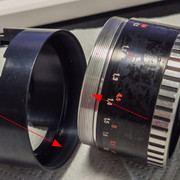
| stevemark 氏の書き込み: |
| Get some PTFE ("Teflon") tubes with suitable inner / outer diameter and cut them into suitable pieces. S |
Could be a good budget solution for projection lenses, but how to lock it to prevent focus creep besides always holding the lens with fingers.[/img] |
|
| トップへ戻る |
|
|
NiceDays
登録日: 2021年6月25日
投稿: 100
|
投稿日時: 日 4月 12, 2026 9:54 am 件名: |
|
投稿日時: 日 4月 12, 2026 9:54 am 件名: |
|
|
NiceDays wrote:
Doh, used some car grease about five years ago on one soviet lens and now entire lens stihinks like a dirty car. Never going to use grease that has stinks. |
|
| トップへ戻る |
|
|
|
|
 日本語
 Español
 中文
 Magyar
 Русский
 Deutsch
 Français



