| 前のトピックへ :: 次のトピックへ |
| 作成者 |
メッセージ |
caspert79 


登録日: 2010年10月31日
投稿: 3912
所在地: The Netherlands
|
 投稿日時: 火 10月 18, 2022 11:11 am 件名: Interesting macro lens find |
|
投稿日時: 火 10月 18, 2022 11:11 am 件名: Interesting macro lens find |
|
|
caspert79 wrote:
Found this lens on Yahoo Auctions Japan. Strictly it's an AF lens, but as I will use it as MF only I thought it was interesting to mention on this forum.
Also, the lens is made of metal and feels very well build, much like the Minolta AF 100/2.8 macro.
BTW: this is a totally different lens from the one we usually see in Europe (and I guess the US), in fact predates it, and features internal focusing.
There's not much info on it on the internet, but I found the lens scheme. Like the current Tokina macro lens, it features a focus limiter, which is usefull if you use it in AF. It's seems to be rather uncommon outside Japan. I will post some images made with it later.
 tokina100mmb by devoscasper, on Flickr
 tokina100mma by devoscasper, on Flickr
 tokina 100mm lens scheme by devoscasper, on Flickr |
|
| トップへ戻る |
|
 |
eggplant


登録日: 2020年5月27日
投稿: 517
|
投稿日時: 火 10月 18, 2022 3:23 pm 件名: |
|
投稿日時: 火 10月 18, 2022 3:23 pm 件名: |
|
|
eggplant wrote:
Interesting- just curious where you got that lens scheme from for this lens? Looks like a digital resource.
I am guessing this came after the 90mm f2.5 macro, but before the latest 100mm f2.8 macro (which has been around since atleast 2000s).
The body looks like 1989 era Tokina.
_________________
UK |
|
| トップへ戻る |
|
|
caspert79
登録日: 2010年10月31日
投稿: 3912
所在地: The Netherlands
|
投稿日時: 火 10月 18, 2022 3:37 pm 件名: |
|
投稿日時: 火 10月 18, 2022 3:37 pm 件名: |
|
|
caspert79 wrote:
| eggplant 氏の書き込み: |
Interesting- just curious where you got that lens scheme from for this lens? Looks like a digital resource.
I am guessing this came after the 90mm f2.5 macro, but before the latest 100mm f2.8 macro (which has been around since atleast 2000s).
The body looks like 1989 era Tokina. |
I found the scheme on the official Tokina website. |
|
| トップへ戻る |
|
|
KEO

登録日: 2018年9月27日
投稿: 813
所在地: USA
|
投稿日時: 火 10月 18, 2022 7:03 pm 件名: |
|
投稿日時: 火 10月 18, 2022 7:03 pm 件名: |
|
|
KEO wrote:
I have a 100mm 2.8 ATX-Pro, which is very plasticy and light, but also extremely good. It looks very similar, although I like your metal body version better. I've never seen one of those before either.
Mine's actually not the latest Tokina 100 macro anymore. It was discontinued a couple years ago in favor of the ATX-i. |
|
| トップへ戻る |
|
|
caspert79
登録日: 2010年10月31日
投稿: 3912
所在地: The Netherlands
|
投稿日時: 火 10月 18, 2022 8:09 pm 件名: |
|
投稿日時: 火 10月 18, 2022 8:09 pm 件名: |
|
|
caspert79 wrote:
| KEO 氏の書き込み: |
I have a 100mm 2.8 ATX-Pro, which is very plasticy and light, but also extremely good. It looks very similar, although I like your metal body version better. I've never seen one of those before either.
Mine's actually not the latest Tokina 100 macro anymore. It was discontinued a couple years ago in favor of the ATX-i. |
Yeah I know they look similar, but they are very different. This one has internal focus and only does 1:2 magnification. But they kept some design elements and the focus limiter in the later models. |
|
| トップへ戻る |
|
|
KEO
登録日: 2018年9月27日
投稿: 813
所在地: USA
|
投稿日時: 木 10月 20, 2022 6:12 pm 件名: |
|
投稿日時: 木 10月 20, 2022 6:12 pm 件名: |
|
|
KEO wrote:
| caspert79 氏の書き込み: |
| Yeah I know they look similar, but they are very different. This one has internal focus and only does 1:2 magnification. But they kept some design elements and the focus limiter in the later models. |
Definitely an interesting find. You may be right about it being Japan-only. |
|
| トップへ戻る |
|
|
philslizzy

登録日: 2012年8月7日
投稿: 4753
所在地: Cheshire, England
|
投稿日時: 金 10月 21, 2022 1:03 pm 件名: |
|
投稿日時: 金 10月 21, 2022 1:03 pm 件名: |
|
|
philslizzy wrote:
I have the same lens and happy with it, I noticed that in certain light you can get flare from a light leak in the adaptor. I cleared mine up by putting black duct tape over the lens release button and round the join between the lens and adaptor. Its my only A fit lens so that's no big deal.
_________________
Hero in the 'messin-with-cameras-for-the-hell-of-it department'. Official. |
|
| トップへ戻る |
|
|
caspert79
登録日: 2010年10月31日
投稿: 3912
所在地: The Netherlands
|
投稿日時: 金 10月 21, 2022 5:48 pm 件名: |
|
投稿日時: 金 10月 21, 2022 5:48 pm 件名: |
|
|
caspert79 wrote:
| philslizzy 氏の書き込み: |
| I have the same lens and happy with it, I noticed that in certain light you can get flare from a light leak in the adaptor. I cleared mine up by putting black duct tape over the lens release button and round the join between the lens and adaptor. Its my only A fit lens so that's no big deal. |
I ran a little test today against the Minolta MD3 100/2.5 and Canon EF 100/2, focusing at a fairly close object. I have to run it again though, as the Minolta en Canon seemed to shift focus while closing the aperture. So I have to refocus at every aperture. |
|
| トップへ戻る |
|
|
caspert79
登録日: 2010年10月31日
投稿: 3912
所在地: The Netherlands
|
投稿日時: 土 10月 22, 2022 2:45 pm 件名: |
|
投稿日時: 土 10月 22, 2022 2:45 pm 件名: |
|
|
caspert79 wrote:
Some test shots I took today (double click for full size):
 TokinaATX10028IF_15 by devoscasper, on Flickr
 TokinaATX10028IF_11 by devoscasper, on Flickr
 TokinaATX10028IF_8 by devoscasper, on Flickr
 TokinaATX10028IF_7 by devoscasper, on Flickr
 TokinaATX10028IF_6 by devoscasper, on Flickr
 TokinaATX10028IF_3 by devoscasper, on Flickr
Infinity test (I had to exclude f/4 because of misfocusing):
 test@infinity by devoscasper, on Flickr
CA's @ 100% magnification:
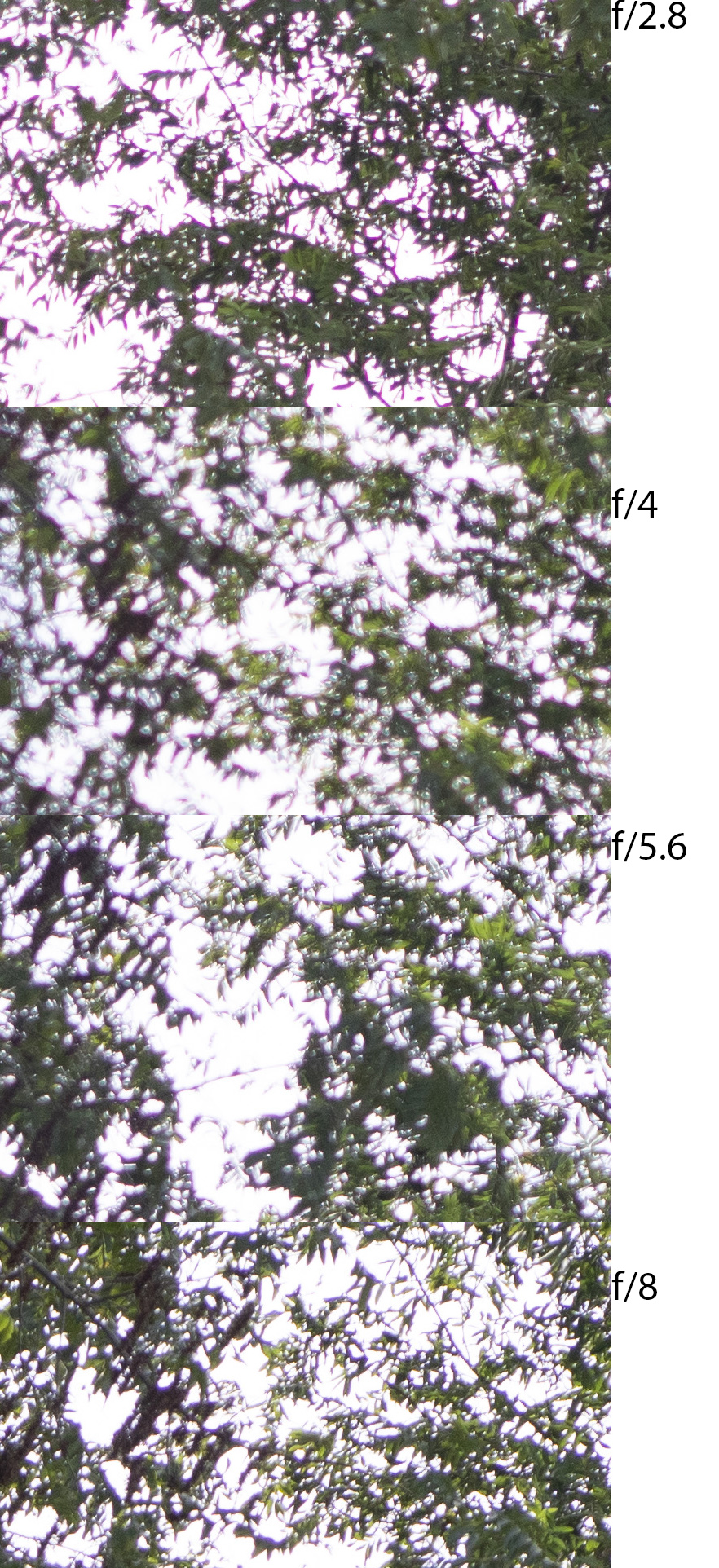 CAs by devoscasper, on Flickr
Conclusion after today:
The Tokina AT-X 100mm f/2.8 Internal Focus has a few strong points and a couple of weaker point IMO:
+ very good sharpness/ resolution across the frame starting at f/2.8
+ all metal, great build quality
- quite pronounced CA in high contrast situations especially on hi res sensors
- hard to hand focus precisely (sensitive)
- 1:2 only |
|
| トップへ戻る |
|
|
calvin83

登録日: 2009年4月12日
投稿: 7740
所在地: Hong Kong
|
投稿日時: 土 10月 22, 2022 4:16 pm 件名: |
|
投稿日時: 土 10月 22, 2022 4:16 pm 件名: |
|
|
calvin83 wrote:

| caspert79 氏の書き込み: |
Conclusion after today:
The Tokina AT-X 100mm f/2.8 Internal Focus has a few strong points and a couple of weaker point IMO:
+ very good sharpness/ resolution across the frame starting at f/2.8
+ all metal, great build quality
- quite pronounced CA in high contrast situations especially on hi res sensors
- hard to hand focus precisely (sensitive)
- 1:2 only |
It seems this lens carry some features from the Bokina:
-all metal build
-purple fringing
-1:2 magnification
_________________
The best lens is the one you have with you.
https://lensfever.com/
https://www.instagram.com/_lens_fever/ |
|
| トップへ戻る |
|
|
caspert79
登録日: 2010年10月31日
投稿: 3912
所在地: The Netherlands
|
投稿日時: 土 10月 22, 2022 4:24 pm 件名: |
|
投稿日時: 土 10月 22, 2022 4:24 pm 件名: |
|
|
caspert79 wrote:
| calvin83 氏の書き込み: |
| caspert79 氏の書き込み: |
Conclusion after today:
The Tokina AT-X 100mm f/2.8 Internal Focus has a few strong points and a couple of weaker point IMO:
+ very good sharpness/ resolution across the frame starting at f/2.8
+ all metal, great build quality
- quite pronounced CA in high contrast situations especially on hi res sensors
- hard to hand focus precisely (sensitive)
- 1:2 only |
It seems this lens carry some features from the Bokina:
-all metal build
-purple fringing
-1:2 magnification |
Yeah indeed. This version of the Tokina 100 can be found for very little money in Japan. Hard to beat for the price. I paid 39€ for mine. |
|
| トップへ戻る |
|
|
blotafton

登録日: 2013年8月8日
投稿: 1794
所在地: Sweden
|
投稿日時: 土 10月 22, 2022 4:57 pm 件名: |
|
投稿日時: 土 10月 22, 2022 4:57 pm 件名: |
|
|
blotafton wrote:
Very good test shots. I don't mind the CA and would get it if I need one. |
|
| トップへ戻る |
|
|
caspert79
登録日: 2010年10月31日
投稿: 3912
所在地: The Netherlands
|
投稿日時: 土 10月 22, 2022 8:44 pm 件名: |
|
投稿日時: 土 10月 22, 2022 8:44 pm 件名: |
|
|
caspert79 wrote:
| blotafton 氏の書き込み: |
| Very good test shots. I don't mind the CA and would get it if I need one. |
Purple fringing not a big deal for me either. The 1:2 magnification also not; I hardly ever shoot real macro’s. Lots of close up shots though. |
|
| トップへ戻る |
|
|
caspert79
登録日: 2010年10月31日
投稿: 3912
所在地: The Netherlands
|
投稿日時: 日 10月 23, 2022 8:53 am 件名: |
|
投稿日時: 日 10月 23, 2022 8:53 am 件名: |
|
|
caspert79 wrote:
Some more tests. First bokeh comparison against Canon EF 100/2 and Minolta MDiii 100/2.5:
 bokehcomparison by devoscasper, on Flickr
Lets zoom in a bit more (please ignore the dust  )
 bokehcomparison2 by devoscasper, on Flickr
Judging from the bokeh balls, the aperture opening on the three lenses are not exactly the same. The Canon, being the fastest lens, allows for best subject separation. At wider apertures all lenses show good bokeh. Stopped down a bit more, the Canon and Tokina show rounder bokeh balls (more aperture blades).
The hexagonal bokeh of the Minolta becomes slightly distracting.
Then center sharpness comparison:
 sharpness comparison by devoscasper, on Flickr
If there is a significant difference in the first place, it doesn't show in my comparison. |
|
| トップへ戻る |
|
|
Crazy Leica Fox

登録日: 2017年4月29日
投稿: 83
|
投稿日時: 月 10月 24, 2022 11:52 am 件名: |
|
投稿日時: 月 10月 24, 2022 11:52 am 件名: |
|
|
Crazy Leica Fox wrote:

| caspert79 氏の書き込み: |
| Judging from the bokeh balls, the aperture opening on the three lenses are not exactly the same. |
I noticed this too, and now I'm wondering whether some manufacturers intentionally "cheat" by having the real aperture be slightly larger than the setting.
| caspert79 氏の書き込み: |
| Then center sharpness comparison: |
To my eyes, the Minolta brings out slightly more detail in the label, but it's certainly within the margin of error for focusing and sample variation. |
|
| トップへ戻る |
|
|
caspert79
登録日: 2010年10月31日
投稿: 3912
所在地: The Netherlands
|
投稿日時: 月 10月 24, 2022 5:42 pm 件名: |
|
投稿日時: 月 10月 24, 2022 5:42 pm 件名: |
|
|
caspert79 wrote:
| Crazy Leica Fox 氏の書き込み: |
| caspert79 氏の書き込み: |
| Judging from the bokeh balls, the aperture opening on the three lenses are not exactly the same. |
I noticed this too, and now I'm wondering whether some manufacturers intentionally "cheat" by having the real aperture be slightly larger than the setting.
| caspert79 氏の書き込み: |
| Then center sharpness comparison: |
To my eyes, the Minolta brings out slightly more detail in the label, but it's certainly within the margin of error for focusing and sample variation. |
The aperture of the Tokina is controlled by an adapter with build in aperture which could explain part of the difference. But still there is a difference between the Canon and Minolta. And yes, I agree that miniscule differences in sharpness could be caused my multiple factors. Even slight exposure differences could do this. The V Canon is very good in the corners by the way, something I didn't test here. |
|
| トップへ戻る |
|
|
RokkorDoctor

登録日: 2021年11月27日
投稿: 1562
所在地: Kent, UK
Expire: 2025-05-01
|
投稿日時: 月 10月 24, 2022 8:17 pm 件名: |
|
投稿日時: 月 10月 24, 2022 8:17 pm 件名: |
|
|
RokkorDoctor wrote:
| caspert79 氏の書き込み: |
| Crazy Leica Fox 氏の書き込み: |
| caspert79 氏の書き込み: |
| Judging from the bokeh balls, the aperture opening on the three lenses are not exactly the same. |
I noticed this too, and now I'm wondering whether some manufacturers intentionally "cheat" by having the real aperture be slightly larger than the setting.
| caspert79 氏の書き込み: |
| Then center sharpness comparison: |
To my eyes, the Minolta brings out slightly more detail in the label, but it's certainly within the margin of error for focusing and sample variation. |
The aperture of the Tokina is controlled by an adapter with build in aperture which could explain part of the difference. But still there is a difference between the Canon and Minolta. And yes, I agree that miniscule differences in sharpness could be caused my multiple factors. Even slight exposure differences could do this. The V Canon is very good in the corners by the way, something I didn't test here. |
As much as I like Minolta Rokkor lenses (I'm including the MD-III generation), unfortunately with the later lens lines (MD I/II/III) I have always found the accuracy of the aperture to be a weak point, especially the smaller apertures f/16/22/32.
This can partly be explained by Minolta's unfortunate choice of plastic aperture rings on the majority of their later lenses; these plastic aperture rings have a slight circumferential "flex" and therefore a poor repeatability of the smaller aperture settings.
But largely it should be noted that in their top-of-the-line camera with which the MD-line was introduced (the XD7/XD11) the final exposure measurement was always done just before the shutter release but after the aperture had been stopped down. Therefore any inaccuracy in the aperture setting would be compensated for by a tweak in shutter speed as calculated from their final exposure measurement. This did mean that two exposure measurements were taken: one at open aperture to give an indicative exposure reading in the finder, and a second (final) one at closed-down aperture just before the shutter released. It does mean that the final aperture/shutter speed combination used could be a little different from the one indicated just before in the finder (in my experience up to half a stop or so.) Of course in manual mode no such compensation was done and the resulting exposure would be a little off from expected if the aperture wasn't quite correct.
Unlike on their later AF lenses, on Minolta MC/MD lenses there is no reliable linear or non-linear relationship between the position of the aperture actuation pin and the affected lens stop-down. For shutter-speed priority mode in the XD7/XD11 where an exposure-determined aperture would be indicated, and program mode on the X700 where a target aperture would be calculated, the target aperture is attained by measuring the exposure whilst the aperture is closing, and at the target exposure an electromagnetically actuated locking-pal would engage a gear on the aperture actuation arm inside the camera to stop the aperture close-down. As there is some overshoot/bounce back in the whole of the aperture mechanism & assembly, a final exposure measurement was again taken just before the shutter release to tweak the shutter speed in order to attain the correct exposure.
Whether in retrospect the whole system was well-thought out is debatable, but it certainly was technically accomplished given their desire to have the (then) new shutter-speed priority and program modes work with the legacy aperture actuation mechanism that was a hang-over from the older AUTO-ROKKOR and MC lenses, such that the lens mount stayed compatible!
In their later AF cameras (Dynax/Maxxum) with a newly designed lens mount there was a linear relationship between the aperture pin position of A-mount lenses and aperture stop-down, and the cameras therefore had a rotational encoder embedded in the gear mechanism actuating the aperture control lever, so a target aperture could be set by the camera by counting (partial) revolutions of a specific gear in the actuator gear train.
_________________
Mark
SONY A7S, A7RII + dust-sealed modded Novoflex/Fotodiox/Rayqual MD-NEX adapters
Minolta SR-1, SRT-101/303, XD7/XD11, XGM, X700
Bronica SQAi
Ricoh GX100
Minolta majority of all Rokkor SR/AR/MC/MD models made
Sigma 14mm/3.5 for SR mount
Tamron SP 60B 300mm/2.8 (Adaptall)
Samyang T-S 24mm/3.5 (Nikon mount, DIY converted to SR mount)
Schneider-Kreuznach PC-Super-Angulon 28mm/2.8 (SR mount)
Bronica PS 35/40/50/65/80/110/135/150/180/200/250mm |
|
| トップへ戻る |
|
|
caspert79
登録日: 2010年10月31日
投稿: 3912
所在地: The Netherlands
|
投稿日時: 月 10月 24, 2022 9:12 pm 件名: |
|
投稿日時: 月 10月 24, 2022 9:12 pm 件名: |
|
|
caspert79 wrote:
| RokkorDoctor 氏の書き込み: |
| caspert79 氏の書き込み: |
| Crazy Leica Fox 氏の書き込み: |
| caspert79 氏の書き込み: |
| Judging from the bokeh balls, the aperture opening on the three lenses are not exactly the same. |
I noticed this too, and now I'm wondering whether some manufacturers intentionally "cheat" by having the real aperture be slightly larger than the setting.
| caspert79 氏の書き込み: |
| Then center sharpness comparison: |
To my eyes, the Minolta brings out slightly more detail in the label, but it's certainly within the margin of error for focusing and sample variation. |
The aperture of the Tokina is controlled by an adapter with build in aperture which could explain part of the difference. But still there is a difference between the Canon and Minolta. And yes, I agree that miniscule differences in sharpness could be caused my multiple factors. Even slight exposure differences could do this. The V Canon is very good in the corners by the way, something I didn't test here. |
As much as I like Minolta Rokkor lenses (I'm including the MD-III generation), unfortunately with the later lens lines (MD I/II/III) I have always found the accuracy of the aperture to be a weak point, especially the smaller apertures f/16/22/32.
This can partly be explained by Minolta's unfortunate choice of plastic aperture rings on the majority of their later lenses; these plastic aperture rings have a slight circumferential "flex" and therefore a poor repeatability of the smaller aperture settings.
But largely it should be noted that in their top-of-the-line camera with which the MD-line was introduced (the XD7/XD11) the final exposure measurement was always done just before the shutter release but after the aperture had been stopped down. Therefore any inaccuracy in the aperture setting would be compensated for by a tweak in shutter speed as calculated from their final exposure measurement. This did mean that two exposure measurements were taken: one at open aperture to give an indicative exposure reading in the finder, and a second (final) one at closed-down aperture just before the shutter released. It does mean that the final aperture/shutter speed combination used could be a little different from the one indicated just before in the finder (in my experience up to half a stop or so.) Of course in manual mode no such compensation was done and the resulting exposure would be a little off from expected if the aperture wasn't quite correct.
Unlike on their later AF lenses, on Minolta MC/MD lenses there is no reliable linear or non-linear relationship between the position of the aperture actuation pin and the affected lens stop-down. For shutter-speed priority mode in the XD7/XD11 where an exposure-determined aperture would be indicated, and program mode on the X700 where a target aperture would be calculated, the target aperture is attained by measuring the exposure whilst the aperture is closing, and at the target exposure an electromagnetically actuated locking-pal would engage a gear on the aperture actuation arm inside the camera to stop the aperture close-down. As there is some overshoot/bounce back in the whole of the aperture mechanism & assembly, a final exposure measurement was again taken just before the shutter release to tweak the shutter speed in order to attain the correct exposure.
Whether in retrospect the whole system was well-thought out is debatable, but it certainly was technically accomplished given their desire to have the (then) new shutter-speed priority and program modes work with the legacy aperture actuation mechanism that was a hang-over from the older AUTO-ROKKOR and MC lenses, such that the lens mount stayed compatible!
In their later AF cameras (Dynax/Maxxum) with a newly designed lens mount there was a linear relationship between the aperture pin position of A-mount lenses and aperture stop-down, and the cameras therefore had a rotational encoder embedded in the gear mechanism actuating the aperture control lever, so a target aperture could be set by the camera by counting (partial) revolutions of a specific gear in the actuator gear train. |
Thanks for the interesting information. I wouldn’t be surprised if Minolta was smuggling a bit actually with the maximum aperture claim. After all, the mdiii is a tiny lens for being that fast. The bokeh balls @f/2.5 seem to be equally sized as the Canon @f/2.8. I will compare shutter speeds later. |
|
| トップへ戻る |
|
|
RokkorDoctor
登録日: 2021年11月27日
投稿: 1562
所在地: Kent, UK
Expire: 2025-05-01
|
投稿日時: 火 10月 25, 2022 7:10 am 件名: |
|
投稿日時: 火 10月 25, 2022 7:10 am 件名: |
|
|
RokkorDoctor wrote:
| caspert79 氏の書き込み: |
| Thanks for the interesting information. I wouldn’t be surprised if Minolta was smuggling a bit actually with the maximum aperture claim. After all, the mdiii is a tiny lens for being that fast. The bokeh balls @f/2.5 seem to be equally sized as the Canon @f/2.8. I will compare shutter speeds later. |
It is possible.
Do bear in mind though that the f/stop is defined as ratio of the entrance pupil diameter to the focal length, not the ratio of the exit pupil diameter to the focal length. So strictly speaking you shouldn't really judge the f/stop of a lens by the size of the bokeh balls, although for lenses of similar focal length and same f/stop you would expect the bokeh balls to be of somewhat similar size, depending on optical construction.
Bokeh ball size is more aligned to the N.A. (numerical aperture) of the image space of a lens which, whilst related to the f/stop, isn't the same as the f/stop.
_________________
Mark
SONY A7S, A7RII + dust-sealed modded Novoflex/Fotodiox/Rayqual MD-NEX adapters
Minolta SR-1, SRT-101/303, XD7/XD11, XGM, X700
Bronica SQAi
Ricoh GX100
Minolta majority of all Rokkor SR/AR/MC/MD models made
Sigma 14mm/3.5 for SR mount
Tamron SP 60B 300mm/2.8 (Adaptall)
Samyang T-S 24mm/3.5 (Nikon mount, DIY converted to SR mount)
Schneider-Kreuznach PC-Super-Angulon 28mm/2.8 (SR mount)
Bronica PS 35/40/50/65/80/110/135/150/180/200/250mm |
|
| トップへ戻る |
|
|
caspert79
登録日: 2010年10月31日
投稿: 3912
所在地: The Netherlands
|
投稿日時: 水 5月 10, 2023 3:22 pm 件名: |
|
投稿日時: 水 5月 10, 2023 3:22 pm 件名: |
|
|
caspert79 wrote:
Image under controlled lighting, using 5 images stacked in Helicon Focus. Clickable for full resolution:
 TokATX10028IFSlowers by devoscasper, on Flickr |
|
| トップへ戻る |
|
|
|
|
 日本語
 Español
 中文
 Magyar
 Русский
 Deutsch
 Français



