| 前のトピックへ :: 次のトピックへ |
| 作成者 |
メッセージ |
visualopsins 


登録日: 2009年3月5日
投稿: 11703
所在地: California
Expire: 2027-07-11
|
 投稿日時: 木 12月 08, 2022 10:56 pm 件名: |
|
投稿日時: 木 12月 08, 2022 10:56 pm 件名: |
|
|
visualopsins wrote:
| Himself 氏の書き込み: |
| visualopsins 氏の書き込み: |
Where's the Takumar?  |
In my collection  ( the 1:1 one ) |
Me too! Yes f/4 is "slow", but Heliar formula gives excellent results.
_________________
☮☮☮☮☮☮☮☮☮☮☮☮☮☮☮☮☮☮☮☮☮☮☮☮☮☮☮☮☮☮☮☮ like attracts like! ☮☮☮☮☮☮☮☮☮☮☮☮☮☮☮☮☮☮☮☮☮☮☮☮☮☮☮☮☮☮☮☮
Cameras: Sony ILCE-7RM2, Spotmatics II, F, and ESII, Nikon P4
Lenses:
M42 Asahi Optical Co., Takumar 1:4 f=35mm, 1:2 f=58mm (Sonnar), 1:2.4 f=58mm (Heliar), 1:2.2 f=55mm (Gaussian), 1:2.8 f=105mm (Model I), 1:2.8/105 (Model II), 1:5.6/200, Tele-Takumar 1:5.6/200, 1:6.3/300, Macro-Takumar 1:4/50, Auto-Takumar 1:2.3 f=35, 1:1.8 f=55mm, 1:2.2 f=55mm, Super-TAKUMAR 1:3.5/28 (fat), 1:2/35 (Fat), 1:1.4/50 (8-element), Super-Multi-Coated Fisheye-TAKUMAR 1:4/17, Super-Multi-Coated TAKUMAR 1:4.5/20, 1:3.5/24, 1:3.5/28, 1:2/35, 1:3.5/35, 1:1.8/85, 1:1.9/85 1:2.8/105, 1:3.5/135, 1:2.5/135 (II), 1:4/150, 1:4/200, 1:4/300, 1:4.5/500, Super-Multi-Coated Macro-TAKUMAR 1:4/50, 1:4/100, Super-Multi-Coated Bellows-TAKUMAR 1:4/100, SMC TAKUMAR 1:1.4/50, 1:1.8/55
M42 Carl Zeiss Jena Flektogon 2.4/35
Contax Carl Zeiss Vario-Sonnar T* 28-70mm F3.5-4.5
Pentax K-mount SMC PENTAX-A ZOOM 1:3.5 35~105mm, SMC PENTAX ZOOM 1:4 45~125mm
Nikon Micro-NIKKOR-P-C Auto 1:3.5 f=55mm, NIKKOR-P Auto 105mm f/2.5 Pre-AI (Sonnar), Micro-NIKKOR 105mm 1:4 AI, NIKKOR AI-S 35-135mm f/3,5-4,5
Solinon 1:5.6/18 ASPH.
Tamron SP 17mm f/3.5 (51B), Tamron SP 17mm f/3.5 (151B), SP 500mm f/8 (55BB), SP 70-210mm f/3.5 (19AH)
Vivitar 100mm 1:2.8 MC 1:1 Macro Telephoto (Kiron)
|
|
| トップへ戻る |
|
 |
stevemark
登録日: 2011年4月29日
投稿: 5511
所在地: Switzerland
|
投稿日時: 木 12月 08, 2022 11:03 pm 件名: |
|
投稿日時: 木 12月 08, 2022 11:03 pm 件名: |
|
|
stevemark wrote:
| visualopsins 氏の書き込み: |
| Himself 氏の書き込み: |
| visualopsins 氏の書き込み: |
| Where's the Takumar? |
In my collection ( the 1:1 one ) |
Me too! Yes f/4 is "slow", but Heliar formula gives excellent results. |
No Heliar, sorry ... a simple Tessar-type lens:
https://www.pentaxforums.com/lensreviews/S-M-C-Super-Macro-Takumar-50mm-F4.html
The vintage 4/100mm macro lenses often are Heliar-type, though.
S
_________________
www.artaphot.ch |
|
| トップへ戻る |
|
|
visualopsins
登録日: 2009年3月5日
投稿: 11703
所在地: California
Expire: 2027-07-11
|
投稿日時: 金 12月 09, 2022 12:10 am 件名: |
|
投稿日時: 金 12月 09, 2022 12:10 am 件名: |
|
|
visualopsins wrote:

_________________
☮☮☮☮☮☮☮☮☮☮☮☮☮☮☮☮☮☮☮☮☮☮☮☮☮☮☮☮☮☮☮☮ like attracts like! ☮☮☮☮☮☮☮☮☮☮☮☮☮☮☮☮☮☮☮☮☮☮☮☮☮☮☮☮☮☮☮☮
Cameras: Sony ILCE-7RM2, Spotmatics II, F, and ESII, Nikon P4
Lenses:
M42 Asahi Optical Co., Takumar 1:4 f=35mm, 1:2 f=58mm (Sonnar), 1:2.4 f=58mm (Heliar), 1:2.2 f=55mm (Gaussian), 1:2.8 f=105mm (Model I), 1:2.8/105 (Model II), 1:5.6/200, Tele-Takumar 1:5.6/200, 1:6.3/300, Macro-Takumar 1:4/50, Auto-Takumar 1:2.3 f=35, 1:1.8 f=55mm, 1:2.2 f=55mm, Super-TAKUMAR 1:3.5/28 (fat), 1:2/35 (Fat), 1:1.4/50 (8-element), Super-Multi-Coated Fisheye-TAKUMAR 1:4/17, Super-Multi-Coated TAKUMAR 1:4.5/20, 1:3.5/24, 1:3.5/28, 1:2/35, 1:3.5/35, 1:1.8/85, 1:1.9/85 1:2.8/105, 1:3.5/135, 1:2.5/135 (II), 1:4/150, 1:4/200, 1:4/300, 1:4.5/500, Super-Multi-Coated Macro-TAKUMAR 1:4/50, 1:4/100, Super-Multi-Coated Bellows-TAKUMAR 1:4/100, SMC TAKUMAR 1:1.4/50, 1:1.8/55
M42 Carl Zeiss Jena Flektogon 2.4/35
Contax Carl Zeiss Vario-Sonnar T* 28-70mm F3.5-4.5
Pentax K-mount SMC PENTAX-A ZOOM 1:3.5 35~105mm, SMC PENTAX ZOOM 1:4 45~125mm
Nikon Micro-NIKKOR-P-C Auto 1:3.5 f=55mm, NIKKOR-P Auto 105mm f/2.5 Pre-AI (Sonnar), Micro-NIKKOR 105mm 1:4 AI, NIKKOR AI-S 35-135mm f/3,5-4,5
Solinon 1:5.6/18 ASPH.
Tamron SP 17mm f/3.5 (51B), Tamron SP 17mm f/3.5 (151B), SP 500mm f/8 (55BB), SP 70-210mm f/3.5 (19AH)
Vivitar 100mm 1:2.8 MC 1:1 Macro Telephoto (Kiron)
|
|
| トップへ戻る |
|
|
D1N0

登録日: 2012年8月7日
投稿: 2726
|
投稿日時: 金 12月 09, 2022 10:53 am 件名: |
|
投稿日時: 金 12月 09, 2022 10:53 am 件名: |
|
|
D1N0 wrote:
Pentax used the Heliar design in the 100/4 Lenses from the Bellows and S-M-C Takumar up until the Pentax-a 100/4 The successor SMC Pentax-A 100mm 1:2.8 is pretty rare and has a 7 element design.

_________________
pentaxian |
|
| トップへ戻る |
|
|
RokkorDoctor


登録日: 2021年11月27日
投稿: 1562
所在地: Kent, UK
Expire: 2025-05-01
|
投稿日時: 金 12月 09, 2022 11:26 am 件名: |
|
投稿日時: 金 12月 09, 2022 11:26 am 件名: |
|
|
RokkorDoctor wrote:
| D1N0 氏の書き込み: |
Pentax used the Heliar design in the 100/4 Lenses from the Bellows and S-M-C Takumar up until the Pentax-a 100/4 The successor SMC Pentax-A 100mm 1:2.8 is pretty rare and has a 7 element design.
|
The Pentax 100/4 bellows lens I have has a star-shaped aperture at medium settings (~f/8 ). As a regular octagonal or rounded aperture would have been easy to make I must assume that this has a specific purpose. My best guess is that this renders the nature of the diffraction (degree of softening, number and nature of diffraction spikes) more palatable in the optimum aperture range for macro use. The reason I suspect a specific macro-related purpose of that star-shaped aperture is that I see something similar on my Minolta Micro Bellows lenses (12.5mm/2 at ~f/2.8, 25mm/2.5 at ~f/4 ), as well as my very early (M39) Minolta MACRO ROKKOR-QF 50mm/3.5 at ~f/8.
An image of the Pentax' star-shaped aperture is shown in the thread:
http://forum.mflenses.com/what-lenses-with-star-shaped-aperture-do-you-know-t46890,start,23.html
*EDIT: another possible reason for these hexagonal shapes may be that all these appear to be the pull-across-the-centre style aperture blades, rather than the more common later push-into-the-centre style aperture blades; it could therefore be something to do with an attempt to linearise the aperture setting with respect to the rotation of the aperture ring. (old preset lenses with the traditional curved pull-across-the-centre style aperture blades suffered from the cosmetic/haptics issue of having the smaller aperture settings increasingly bunched-up on the aperture ring)
_________________
Mark
SONY A7S, A7RII + dust-sealed modded Novoflex/Fotodiox/Rayqual MD-NEX adapters
Minolta SR-1, SRT-101/303, XD7/XD11, XGM, X700
Bronica SQAi
Ricoh GX100
Minolta majority of all Rokkor SR/AR/MC/MD models made
Sigma 14mm/3.5 for SR mount
Tamron SP 60B 300mm/2.8 (Adaptall)
Samyang T-S 24mm/3.5 (Nikon mount, DIY converted to SR mount)
Schneider-Kreuznach PC-Super-Angulon 28mm/2.8 (SR mount)
Bronica PS 35/40/50/65/80/110/135/150/180/200/250mm |
|
| トップへ戻る |
|
|
D1N0
登録日: 2012年8月7日
投稿: 2726
|
投稿日時: 金 12月 09, 2022 7:53 pm 件名: |
|
投稿日時: 金 12月 09, 2022 7:53 pm 件名: |
|
|
D1N0 wrote:
For some reason mainly preset macro lenses have the star shaped aperture. The auto aperture lenses have regular 6 or 8 bladed apertures. Partly explained by the need for faster apertures (that can close down quickly) in auto aperture lenses. Volna-9 and Industar-61 are other examples. Why they didn't have the same circular apertures most presets have I don't know. Maybe it had to do with diffraction effects. http://hyperphysics.phy-astr.gsu.edu/hbase/phyopt/cirapp2.html
_________________
pentaxian |
|
| トップへ戻る |
|
|
stevemark
登録日: 2011年4月29日
投稿: 5511
所在地: Switzerland
|
投稿日時: 月 12月 12, 2022 1:07 am 件名: |
|
投稿日時: 月 12月 12, 2022 1:07 am 件名: |
|
|
stevemark wrote:
I've just been testing a bunch of short macro lenses (50mm, 55mm and 60mm) on the 24 MP FF Sony A7II. The test arrangement was similar to the one used by the OP.
I've compared the following lenses wide open and at f8, looking both at the center resolution and the corner resolution (scale 1:5):
Canon FD 3.5/50mm Macro
Canon nFD 3.5/50mm Macro
Konica Hexanon AR 3.5/55mm Macro (two samples)
Mamiya Sekor CS 3.5/50mm Macro
Mamiya Sekor E 3.5/50mm Macro
Minolta Macro Rokkor MC-II 3.5/50mm
Minolta Macro Rokkor MC-X 3.5/50mm
Minolta Macro Rokkor MD-II 3.5/50mm
Minolta MD-III 3.5/50mm Macro
Minolta AF 2.8/50mm Macro (first "beercan" series)
Sony AL 2.8/50mm Macro
Micro-Nikkor Ai 3.5/55mm
Micro-Nikkor AiS 2.8/55mm
Micro-Nikkor AF 2.8/60mm
Super-Macro-Takumar 4/50mm
Pentax A 2.8/50mm Macro
Auto-Macro-Topcor RE 3.5/58mm (two samples)
Vivitar Auto Macro 2.8/55mm (SN 28xxxxxx)
Yashica ML 2.8/55mm Macro
While the general performance level of these lenses - especially at the tested ratio of about 1:5 - is pretty high, there are differences. "Newer" not always means "better", and I can confirm casper79's observations regarding the Nikkor AiS 2.8/55mm, the Vivitar (Komine) 2.8/55mm and the Yashica ML 2.8/55mm.
I'll publish the results later this week and post the corresponding link here.
S
_________________
www.artaphot.ch |
|
| トップへ戻る |
|
|
stevemark
登録日: 2011年4月29日
投稿: 5511
所在地: Switzerland
|
投稿日時: 月 12月 12, 2022 1:24 am 件名: |
|
投稿日時: 月 12月 12, 2022 1:24 am 件名: |
|
|
stevemark wrote:
| Ultrapix 氏の書き込み: |
OK, but how many more examples can you give me of a Vivitar that beats both Nikon and Canon with ease? Also, I remember tests at the time of the two Vivitar macro 55s and 90s, and they did not receive glowing comments. I myself used the 55 for a few tests, and perhaps because of the difficulty of focusing at longer distances due to the over-compressed excursion of the focus ring, I didn't like it too much and ended up getting the Micro 55 2.8. These trials make me rethink my old convictions, and yes, they surprise me. The Yashica I knew was excellent, I had given one to a friend and he does excellent things with it. |
Sorry, I wasn't precise enough.
I just wanted to say that back in the 1970/80s (and to some extent even today) the MF Nikkors were (are) a bit overrated.
Some of them truly are excellent, others are not better (or even worse) than the corresponding lenses from lower rated brands (Konica, Minolta, and Yashica come to my mind, but also Vivitar to some extent, or Mamiya).
In the mean time I was able to reproduce the test results published earlier by Casper79, and therefore we can can be pretty sure that both the Vivitar (Komine) as well as the Yashica ML 2.8/55mm Macro lenses are slightly better than the Nikkor 2.8/55mm - at least at the ration of 1:5. From earlier test I strongly suspect that the Nikkor is inferior also in the infinity range, but to be sure I'd have to re-run the entire test.
BTW both the 1st gen AF Micro Nikkors 2.8/60mm and 2.8/105mm are quite a bit inferior to the contemporary Minolta AF 2.8/50mm Macro and 2.8/100mm Macro.
S
_________________
www.artaphot.ch |
|
| トップへ戻る |
|
|
caspert79

登録日: 2010年10月31日
投稿: 3916
所在地: The Netherlands
|
投稿日時: 月 12月 12, 2022 6:34 am 件名: |
|
投稿日時: 月 12月 12, 2022 6:34 am 件名: |
|
|
caspert79 wrote:
Looking out to your results Stephan! |
|
| トップへ戻る |
|
|
caspert79
登録日: 2010年10月31日
投稿: 3916
所在地: The Netherlands
|
投稿日時: 水 12月 14, 2022 8:32 pm 件名: |
|
投稿日時: 水 12月 14, 2022 8:32 pm 件名: |
|
|
caspert79 wrote:
The Canon turns out to be a pretty solid landscape lens (click for full resolution):
 CanonEF5025macro_3 by devoscasper, on Flickr
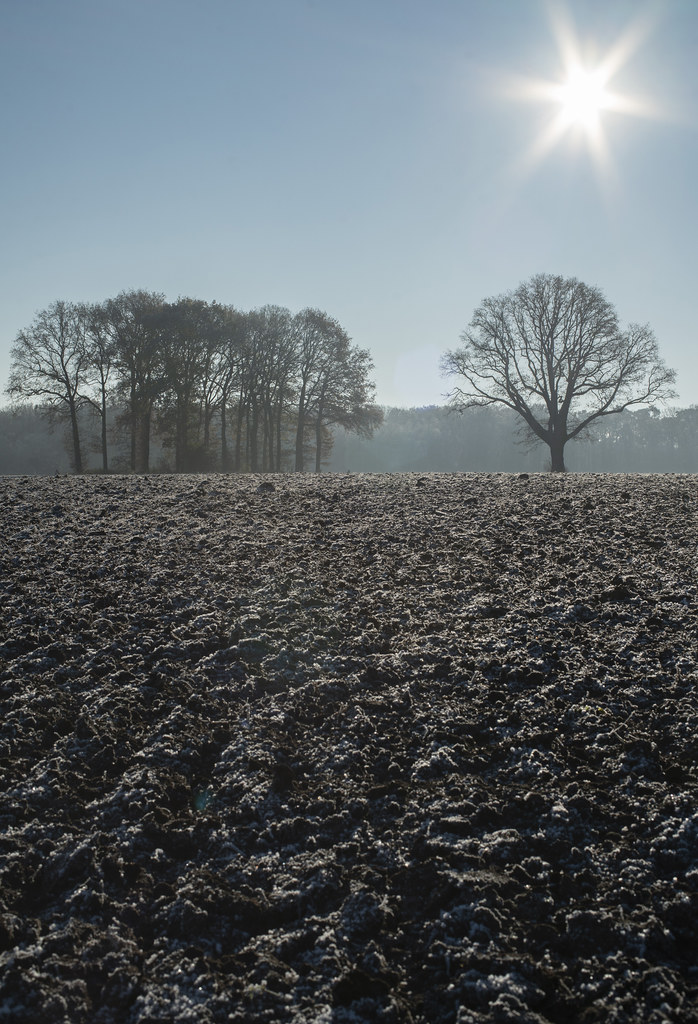 CanonEF5025macro_13 by devoscasper, on Flickr
 CanonEF5025macro_5 by devoscasper, on Flickr |
|
| トップへ戻る |
|
|
visualopsins
登録日: 2009年3月5日
投稿: 11703
所在地: California
Expire: 2027-07-11
|
投稿日時: 水 12月 14, 2022 9:26 pm 件名: |
|
投稿日時: 水 12月 14, 2022 9:26 pm 件名: |
|
|
visualopsins wrote:
 BIF in #1(!) Beautiful light #4
Distant details are sharp with this macro lens.
_________________
☮☮☮☮☮☮☮☮☮☮☮☮☮☮☮☮☮☮☮☮☮☮☮☮☮☮☮☮☮☮☮☮ like attracts like! ☮☮☮☮☮☮☮☮☮☮☮☮☮☮☮☮☮☮☮☮☮☮☮☮☮☮☮☮☮☮☮☮
Cameras: Sony ILCE-7RM2, Spotmatics II, F, and ESII, Nikon P4
Lenses:
M42 Asahi Optical Co., Takumar 1:4 f=35mm, 1:2 f=58mm (Sonnar), 1:2.4 f=58mm (Heliar), 1:2.2 f=55mm (Gaussian), 1:2.8 f=105mm (Model I), 1:2.8/105 (Model II), 1:5.6/200, Tele-Takumar 1:5.6/200, 1:6.3/300, Macro-Takumar 1:4/50, Auto-Takumar 1:2.3 f=35, 1:1.8 f=55mm, 1:2.2 f=55mm, Super-TAKUMAR 1:3.5/28 (fat), 1:2/35 (Fat), 1:1.4/50 (8-element), Super-Multi-Coated Fisheye-TAKUMAR 1:4/17, Super-Multi-Coated TAKUMAR 1:4.5/20, 1:3.5/24, 1:3.5/28, 1:2/35, 1:3.5/35, 1:1.8/85, 1:1.9/85 1:2.8/105, 1:3.5/135, 1:2.5/135 (II), 1:4/150, 1:4/200, 1:4/300, 1:4.5/500, Super-Multi-Coated Macro-TAKUMAR 1:4/50, 1:4/100, Super-Multi-Coated Bellows-TAKUMAR 1:4/100, SMC TAKUMAR 1:1.4/50, 1:1.8/55
M42 Carl Zeiss Jena Flektogon 2.4/35
Contax Carl Zeiss Vario-Sonnar T* 28-70mm F3.5-4.5
Pentax K-mount SMC PENTAX-A ZOOM 1:3.5 35~105mm, SMC PENTAX ZOOM 1:4 45~125mm
Nikon Micro-NIKKOR-P-C Auto 1:3.5 f=55mm, NIKKOR-P Auto 105mm f/2.5 Pre-AI (Sonnar), Micro-NIKKOR 105mm 1:4 AI, NIKKOR AI-S 35-135mm f/3,5-4,5
Solinon 1:5.6/18 ASPH.
Tamron SP 17mm f/3.5 (51B), Tamron SP 17mm f/3.5 (151B), SP 500mm f/8 (55BB), SP 70-210mm f/3.5 (19AH)
Vivitar 100mm 1:2.8 MC 1:1 Macro Telephoto (Kiron)
|
|
| トップへ戻る |
|
|
stevemark
登録日: 2011年4月29日
投稿: 5511
所在地: Switzerland
|
投稿日時: 日 12月 18, 2022 11:12 pm 件名: |
|
投稿日時: 日 12月 18, 2022 11:12 pm 件名: |
|
|
stevemark wrote:
| caspert79 氏の書き込み: |
| Looking out to your results Stephan! |
OK ... here they are.
First a few words on the test:
* 24 MP FF
* scale about 1:5
* wide open (f2.8/f3.5/f4) and f8
* 100% corner crops
* focusing on the corners (unlike all my other tests!!)
* sensor and object were parallel (object was mounted on a flat mirror, and the mirror was aligned so that the lens was reflected exactly)
Let's start with the results from three lenses already testd by Casper:
1) Micro-Nikkor AiS 2.8/55mm
2) Vivitar 2.8/55mm Macro
3) Yashica ML 2.8/55 Macro
The Micro-Nikkor is a [6/5] double gauss. It has a floating system for focusing, and in theory this should keep the performance on a high level while focusing from infinity to 1:2. However we will see that the Micro-Nikkor 2.8/55mm at 1:5 is one of the worst lenses tested here. Interestingly, most other lenses with a rather low performance are also f2.8 floating focusing systems. That's remarkable, but it confirms what Casper has found before.

The Vivitar (Komine) 2.8/55mm Macro is a [5/4] construction (with a similar lens section as the Micro Nikkor 3.5/55). It is the only lens in this test going directly from "infinity" to 1:1. Slightly lower contrast wide open, but otherwise a very nice rendering and high resolution:

The Yashica is a [6/4] construction, but not a double gauss. The Canon (n)FD 3.5/50mm Macro has a similar lens section. Even better contrast than the Vivitar, and certainly a lens to be recommended for critical reproduction work (e. g. paintings)

To sum it up: My test result confirm exactly what Casper has reproted before. Now let's go on with the other lenses, starting with Canon.
_________________
www.artaphot.ch |
|
| トップへ戻る |
|
|
gaeger
登録日: 2010年1月16日
投稿: 794
所在地: Brier, Wash.
Expire: 2026-01-06
|
投稿日時: 月 12月 19, 2022 2:25 am 件名: |
|
投稿日時: 月 12月 19, 2022 2:25 am 件名: |
|
|
gaeger wrote:
Very interesting comparison! I only have the Nikkor (several copies), so I can't compare. But the Vivitar looks great on a test chart.
_________________
Nikon: Bunch of stuff
Minolta: Bunch of stuff
Petri & Zenobia: Less stuff
Instagram | the.klahini |
|
| トップへ戻る |
|
|
caspert79
登録日: 2010年10月31日
投稿: 3916
所在地: The Netherlands
|
投稿日時: 月 12月 19, 2022 5:56 am 件名: |
|
投稿日時: 月 12月 19, 2022 5:56 am 件名: |
|
|
caspert79 wrote:
Thanks for your test Stephan. I wonder if you have the Leica 60/2.8 and Planar 55/2.8 macro; it would be interested to see those tested as well. |
|
| トップへ戻る |
|
|
calvin83

登録日: 2009年4月12日
投稿: 7740
所在地: Hong Kong
|
投稿日時: 月 12月 19, 2022 12:37 pm 件名: |
|
投稿日時: 月 12月 19, 2022 12:37 pm 件名: |
|
|
calvin83 wrote:
| caspert79 氏の書き込み: |
| Thanks for your test Stephan. I wonder if you have the Leica 60/2.8 and Planar 55/2.8 macro; it would be interested to see those tested as well. |
There is Macro-Prakticar 55/2.8 and Makro-Planar 60/2.8. I don't know if Planar 55/2.8 macro exist?
_________________
The best lens is the one you have with you.
https://lensfever.com/
https://www.instagram.com/_lens_fever/ |
|
| トップへ戻る |
|
|
stevemark
登録日: 2011年4月29日
投稿: 5511
所在地: Switzerland
|
投稿日時: 月 12月 19, 2022 1:07 pm 件名: |
|
投稿日時: 月 12月 19, 2022 1:07 pm 件名: |
|
|
stevemark wrote:
| caspert79 氏の書き込み: |
| Thanks for your test Stephan. I wonder if you have the Leica 60/2.8 and Planar 55/2.8 macro; it would be interested to see those tested as well. |
No, I have neither of them!
However, here are a few other lenses ...
First two Canon lenses (FD 3.5/50mm Macro and new FD 3.5/50mm Macro), then the Hexanon AR 3.5/55mm Macro.
The Canons both are [6/4] type constructions, but not double gauss (just the front part is typical gauss). Yashica ML 2.8/55 and 3.5/100 Mcaro lenses share the same basic construction. Both Canons look identical. Their corner resolution is very good even at f3.5. Wide open the contrast is slightly lower than at f8, in fact quite similar to the Yashica ML 2.8/55mm and slightly better than the Vivitar. And better than the Micro Nikkor 2.8/55 for sure!


Now the big surprise (at least for me)! The Konica AR 3.5/55mm - a simple Tessar type lens [4/3] - has very good contrast and detail resolution. And the same thing can be said about the Asahi (Pentax) S-M-C Takumar 4/50mm, also a tessar type lens.

I was aware of the fact that the Konica is quite good also at infinity, and I am surprised that such a simple design results in good images both at infinity as well as at 1:5. Now I'm really getting interested in a comparison ar 1:1 ...!
_________________
www.artaphot.ch |
|
| トップへ戻る |
|
|
stevemark
登録日: 2011年4月29日
投稿: 5511
所在地: Switzerland
|
投稿日時: 月 12月 19, 2022 1:21 pm 件名: |
|
投稿日時: 月 12月 19, 2022 1:21 pm 件名: |
|
|
stevemark wrote:
Next the two lenses Mamiya Sekor CS 3.5/50mm Macro and Mamiya Sekor E 3.5/50mm Macro. Like the famous Micro-Nikkor 3.5/55mm, this one is a Xenotar type too. Since it has a larger angle of view than the Nikkor, it certainly was more difficult to correct! Both Mamiya macro lenses are very nicely built - the built quality of the Sekor E feels even better to me than the Sekor CS. Unlike a few other Sekor E/EF lenses (such as the 1.7/50, the 2.8/35 and the 3.5/2 , this Sekor E does not feel "plasticky" at all.
Interestingly, these two lenses do not perform identically. The Sekor CS has, compared to other Macro lenses, a pretty low performance; the Sekor E is as good as the other famous f3.5 macro lenses from Canon / Minolta / Nikon.
I don't know whether the Sekor E actually is an improved calculation (the Sekor E 1.4/50 clearly is better than the Sekor CS 1.4/50, for instance), or whether my Sekor CS 3.5/50 is a "dud". For time being I assume that the Sekor E in fact was improved, but if someone else could re-test the CS (comparing it to to a Canon FD or a Minolta MC/MD), I would be interested in the results!


_________________
www.artaphot.ch |
|
| トップへ戻る |
|
|
stevemark
登録日: 2011年4月29日
投稿: 5511
所在地: Switzerland
|
投稿日時: 月 12月 19, 2022 1:37 pm 件名: |
|
投稿日時: 月 12月 19, 2022 1:37 pm 件名: |
|
|
stevemark wrote:
Before coming to the Nikkors, we have a pretty "boring" Minolta post. I have quite a few different samples of the Minolta 3.5/50mm Macro - among them the
* Minolta MC-II 3.5/50mm Macro
* Minolta MC-X 3.5/50mm Macro
* Minolta MD-II 3.5/50mm Macro
* Minolta MD-III 3.5/50mm Macro
Offcially, all these lense have the same double gauss [6/4] computation. The lens was highly regarded in the late 1960s and used in industrial applications as well (as was the Micro Nikkor 3.5/55). The test results are pretty uniform - apart from a lower contrast on the early MC-II (due to simpler coatings, I assume), all four lenses perform identically. Their overall performance at 1:5 is virtually indistinguishabe from the Canon FD/nFD 3.5/50 and the Micro Nikkor 3.5/55. Obvioulsy the larger image field of the Canon & Minolta requires a six lens construction, while the Nikkor only needs five lenses.
When it comes to the handling, I prefer the MC-II / MC-X versions. While they are heavier (325g vs 220g for the MD-II), their focusing feels smoother. At a mere 200g, the MD-III is the lightest.


 [/url]
_________________
www.artaphot.ch |
|
| トップへ戻る |
|
|
caspert79
登録日: 2010年10月31日
投稿: 3916
所在地: The Netherlands
|
投稿日時: 月 12月 19, 2022 1:55 pm 件名: |
|
投稿日時: 月 12月 19, 2022 1:55 pm 件名: |
|
|
caspert79 wrote:
Thanks, very useful info. The Hexanon would be an interesting lens to have. The Mamiya E seems a lot better than the CS indeed, at least with your examples. |
|
| トップへ戻る |
|
|
stevemark
登録日: 2011年4月29日
投稿: 5511
所在地: Switzerland
|
投稿日時: 火 12月 20, 2022 1:50 pm 件名: |
|
投稿日時: 火 12月 20, 2022 1:50 pm 件名: |
|
|
stevemark wrote:
Now the Minolta AF 2.8/50mm Macro and its cousin, the Sony AL 2.8/50mm Macro. Here we have some surprises as well. The Minolta AF 2.8/50mm was the first AF Macro lens, and the first AF to go to 1:1. It has a pretty sophisticated double floating system. And - surprise - it is as "good" (or as bad) as the fast Nikkors AiS 2.8/55mm Macro and AF 2.8/60mm Macro!

Now the Sony. While having the "same" lens section, I knew from internal documents back in 2010 that the lens (as well as several other such as the 1.4/50mm and the 1.4/35mm G) had been adapted to new environmentally friendl glass. Obviously while doing so also the performance was improved (same for the 1.4/50mm, BTW):

In addition to that an annoying problem of the MinAF 2.8/50mm when used on digital cameras was solved as well: The last surface of the MinAF 2.8/50mm is concave - which means that reflexions from the sensor will be back-reflected AND concentrated to the center of the sensor at a image scale of about 1:3 (like a mirror lens). This is only visible if your image has bright borders and a dark subject in the center. The Sony AL 2.8/50mm Macro has the same concave last lens, but it was treated with a special nano-coating eleiminating these reflexes.
_________________
www.artaphot.ch |
|
| トップへ戻る |
|
|
caspert79
登録日: 2010年10月31日
投稿: 3916
所在地: The Netherlands
|
|
| トップへ戻る |
|
|
stevemark
登録日: 2011年4月29日
投稿: 5511
所在地: Switzerland
|
投稿日時: 火 12月 20, 2022 3:57 pm 件名: |
|
投稿日時: 火 12月 20, 2022 3:57 pm 件名: |
|
|
stevemark wrote:
| caspert79 氏の書き込み: |
That confirms a comparison I did earlier at infinity.
The Yashica clearly performs better, except wide open in the center. |
Yep, I remember that one. And I'm inclined to re-do my test of all those 50 ... 60mm amcro lenses at infinity.
First, however, I'm off to Italy  ... so maybe in the second half of January.
S
_________________
www.artaphot.ch |
|
| トップへ戻る |
|
|
Crazy Leica Fox

登録日: 2017年4月29日
投稿: 83
|
投稿日時: 水 12月 21, 2022 4:31 am 件名: |
|
投稿日時: 水 12月 21, 2022 4:31 am 件名: |
|
|
Crazy Leica Fox wrote:
Thank you guys for all this work comparing macros! I wanted to make a comparison between my Zeiss Milvus 50mm/2 and OM Zuiko 50mm/2, since some people claim the older Olympus is superior, but it turned out I got a bad copy of that pricey, vintage optic that is blurry around the edges at all distances and apertures.  |
|
| トップへ戻る |
|
|
caspert79
登録日: 2010年10月31日
投稿: 3916
所在地: The Netherlands
|
投稿日時: 水 12月 21, 2022 5:49 am 件名: |
|
投稿日時: 水 12月 21, 2022 5:49 am 件名: |
|
|
caspert79 wrote:
| Crazy Leica Fox 氏の書き込み: |
| Thank you guys for all this work comparing macros! I wanted to make a comparison between my Zeiss Milvus 50mm/2 and OM Zuiko 50mm/2, since some people claim the older Olympus is superior, but it turned out I got a bad copy of that pricey, vintage optic that is blurry around the edges at all distances and apertures. |
That sucks, can you return it? |
|
| トップへ戻る |
|
|
stevemark
登録日: 2011年4月29日
投稿: 5511
所在地: Switzerland
|
投稿日時: 水 12月 21, 2022 8:47 pm 件名: |
|
投稿日時: 水 12月 21, 2022 8:47 pm 件名: |
|
|
stevemark wrote:
| Crazy Leica Fox 氏の書き込み: |
| Thank you guys for all this work comparing macros! I wanted to make a comparison between my Zeiss Milvus 50mm/2 and OM Zuiko 50mm/2, since some people claim the older Olympus is superior, but it turned out I got a bad copy of that pricey, vintage optic that is blurry around the edges at all distances and apertures. |
Wide open that wouldn't surprise me ... but stopped down?
That said, i have tested three copies of the Zuiko 4/75-150mm, and all were ... abysmal ... and my Zuiko 3.5/21mm never gets really shar corners as well (on 24 MP FF). I'm pretty sure that's not a "bad copy" since the Zuiko is a) much smaller and b) has less lenses than its competitors. It would be a big surprise if that would lead to the same performance ...
OK - now let's look at the Nikkors. First the venerable Micro Nikkor 3.5/50mm which was one of the first dedicated macro lenses for the 24x36mm format. It performs pretty well and nearly identical as the Canon / Minolta 3.5/50mm Macro lenses. The Nikkor is a [5/4] Xenotar formula, while the Canon and the Minolta are [6/4] formulas. The Nikkor has a smaller angle of view, and therefore five lenses (insetad of six) are sufficient.

The later Micro Nikkor AiS 2.8/55mm doesn't live up to its reputation, at least not wide open. Since Casper has come to the same result, and since other contemporary f2.8 macros with (double) folating focusing have similar problems, I'm pretty sure the results shown here are valid. The lens tested here as a very stiff focusing, typical for many of the 2.8/55mm Micro Nikkors. Those which have no stiff focusing usually have a stuck aperture instead ... pretty annoying (I have three sample of the Micro Nikkor 2.8/55, all with problems). Nevertheless this lens was an extreme "longseller" and available from Nikon until 2021!

The AF Micro Nikkor 2.8/60mm has an even longer focal length (which facilitates the optical construction). Nevertheless it has siliar performance problems as the 2.8/55mm.

_________________
www.artaphot.ch |
|
| トップへ戻る |
|
|
|
|
 日本語
 Español
 中文
 Magyar
 Русский
 Deutsch
 Français



